Car park cleaning in Aberdeen and Aberdeenshire
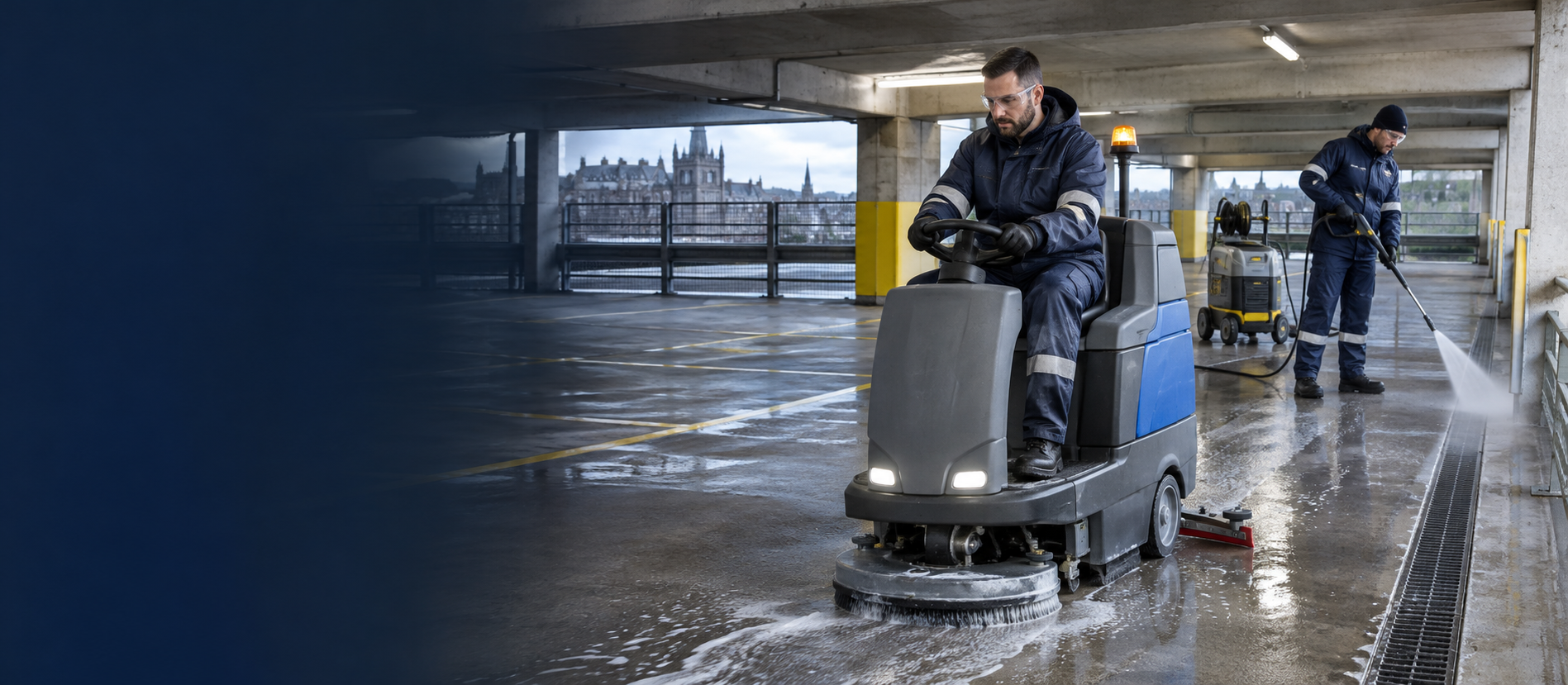
A car park can look empty while its surface holds oil traces, tyre marks, grit, litter and runoff from months of traffic. Cleaning it well involves more than driving a machine across the open bays. Ramps, pedestrian routes, drainage channels, stair doors, corners and lower walls all affect the result, and vehicles may continue to arrive unless the operator plans a closure. Nova Clean Aberdeen discusses car park cleaning with managers of residential blocks, offices, retail premises and other facilities in Aberdeen and Aberdeenshire. We begin with the surface, the layout, the type of contamination and the time during which work can be carried out safely.
A basement beneath a managed building has different ventilation, drainage and vehicle access from an open-air deck. A small private parking area may allow a short staged clean, while a busy multi-storey facility needs a zone plan and clear communication with users. We ask who controls the site, where barriers can be placed and whether water and power are available. A quotation can then distinguish routine surface cleaning from oil treatment, chewing gum removal, litter collection, pressure washing or specialist waste handling.
Map the facility before choosing equipment
Send a plan or photographs showing the number of levels, approximate area, ramp gradients, height limits, entrance width, pedestrian exits and drainage points. The surface may be sealed concrete, asphalt, resin, block paving or a mixture. Some coatings are designed for vehicle grip and can be damaged by aggressive brushes or chemistry. A test area can help establish whether tyre marks and stains are removable without leaving a visibly different patch. We assess structural joints and damaged sections separately because cleaning does not repair them.
Machine dimensions matter. A ride-on scrubber may be efficient on a broad deck but unable to reach around pillars, under low beams or into tight bays. A smaller machine or manual detail work may be needed on ramps and edges. A controlled pressure method may be appropriate in some areas, provided runoff can be managed and the surface is compatible. Using a powerful jet without a collection plan can drive contaminated water into drains or occupied parts of a building.
Oil, fuel and tyre deposits need realistic treatment
Fresh surface oil differs from an old stain that has penetrated porous concrete. The age, volume and source of a spill affect the method. The operator should deal with any active leak and make the area safe before general cleaning. We can discuss absorbent collection, targeted degreasing and controlled extraction where suitable, but we do not promise that every dark mark will vanish. A stain may remain within the substrate even after loose residue has been removed.
Tyre marks, rubber transfer and soot near vehicle routes may respond to compatible mechanical cleaning, but a worn coating can be exposed by treatment. We ask whether the visual goal is a safer, cleaner surface or a uniform appearance across an entire deck. Where re-coating or line marking is planned, the contractor applying the finish should specify the surface preparation it requires. Cleaning can be sequenced before that work but is not a substitute for repairing concrete or applying a new coating.
Drainage and water control
Car park wash water may carry grit, oil, litter and detergent. Before any wet method, identify gullies, interceptors and where runoff will go. A blocked channel or defective drain may require maintenance before cleaning. In a basement, uncontrolled water can migrate toward lift pits, electrical rooms or storage areas. We discuss containment and collection with the site manager, using the layout and building rules to decide what is feasible. The quantity of water and the drying period should fit the reopening plan.
Open-air decks in Aberdeen face wind-driven rain and winter grit. Weather can help explain the soil but does not remove the need to manage wash water. A wet surface can remain slippery, especially on a ramp or pedestrian path. A staged clean should keep traffic away from the active area until it is ready for use. We also ask about planted borders, neighbouring property and public pavements that could be affected by overspray.
Vehicles, people and staged access
The operator should arrange to clear the bays being treated and inform permit holders or residents of the closure. Cleaning around parked cars reduces reach and can create risks from water or equipment. A temporary zone plan can preserve essential access while the team works through levels in sequence. Pedestrian routes to lifts and stairwells must remain safe or have a clearly managed alternative. We agree how emergency access is maintained and who has authority to pause traffic.
A commercial site may need an induction, permit to work and coordination with security. A residential block may require notice to occupants and a factor's approval. The team needs to know whether barriers and signage are supplied by the operator, where machines can be loaded and whether overnight work is permitted. If other contractors are repairing lighting, painting lines or maintaining drainage, their schedules should be coordinated so fresh cleaning is not immediately spoiled.
Walls, columns, stairs and ancillary spaces
Parking decks often have marks on lower walls, protective barriers and pillars. We define whether those surfaces are included and check their finish before treatment. Graffiti or deeply embedded paint is a distinct problem that may need a test. Stairwells, lift lobbies, bin stores and plant rooms also require separate descriptions; they may belong to another contract or demand different safety measures. A car park quotation should not silently include every adjoining room.
For a building that also needs common-area cleaning, tell us about entrances, handrails, door plates and floors outside the vehicle zone. Our office cleaning service addresses occupied workplace areas, while a larger property handover may need a coordinated scope across several spaces. Each surface can be described separately so the result is reviewable.
Frequency, inspection and maintenance boundaries
Traffic, weather, nearby building work and the type of vehicle determine how quickly a surface soils. A facility with heavy deliveries may need more frequent litter and grit removal than a small residential parking area. Rather than promise a fixed result for every location, we can discuss a one-off restoration and the maintenance tasks that might follow. An inspection after cleaning may reveal failing coatings, cracks or persistent dampness that were obscured by dirt. These should be recorded for the operator to assess with the appropriate contractor.
Cleaning cannot improve the structural capacity of a deck, repair a leaking expansion joint or guarantee traction on a damaged coating. Nor should a visually clean floor be treated as proof that an oil interceptor is functioning. A clear scope states what was treated and what remained beyond cleaning. Before reopening, the site manager should review barriers, residual wet areas and the condition of the traffic route.
Record drainage, traffic and surface condition first
A car park is a working traffic space. Before selecting equipment, we ask for the layout, number of decks, entry and exit routes, slopes, surface coating and the location of drains. A plan or photographs help identify blind corners, low ceilings and areas where machinery cannot turn. We also record existing cracks, loose coatings, standing water and worn line markings. Cleaning may reveal those defects, but it cannot repair a failing deck or restore traffic paint as part of a wash.
Underground and enclosed areas have additional constraints. Ventilation, lighting, power supply and clearance height all affect the method. We ask the operator whether the facility can close completely or only in sections and how fire routes will remain open. If electrical equipment or charging bays are present, their boundaries need particular care. The quotation should state which levels, ramps, stairs and pedestrian areas are included, rather than treating the car park as one undifferentiated surface.
Assess oil and tyre marks without promising full removal
Oil can penetrate concrete or a porous coating, while tyre marks can bond to a finished surface. The age of the deposit, previous treatments and substrate determine how much improvement is realistic. We may use a small test to choose a compatible product and agitation level. A very strong cleaner can damage coatings or send unwanted material into drainage. A dark outline may remain after the removable surface soil is lifted. We explain that possibility before treating a large area.
Loose sand and grit should be collected before wet cleaning to reduce abrasion and blocked drains. In Aberdeen, winter grit and rainwater can build up around entrances and ramps. A planned sequence may begin at higher levels, work toward collection points and finish with an inspection of pedestrian routes. If there is an active fuel spill, suspected hazardous liquid or unknown container, the operator should arrange appropriate specialist response before ordinary cleaning begins.
Protect drains and neighbouring areas
Water used on a deck does not disappear when the machine leaves. We need to know where it flows, whether the drains are functioning and what local discharge arrangements apply. A surface with ponding or failed gullies may require controlled collection or a different method. A contractor should not simply push oily residue into a drain. The property manager can provide drainage information and identify any restrictions from the building owner or water authority. Where the required containment exceeds the agreed cleaning scope, it should be priced and planned separately.
Adjacent walls, lifts, electrical cabinets and parked vehicles also need protection from spray and equipment movement. We discuss whether cars can be removed from the zone, and how owners will be notified. A machine cannot reach a bay occupied by a vehicle. The handover should list inaccessible bays and the practical consequences, including whether a return visit is needed. Clear advance communication often saves more time than trying to work around vehicles at the last minute.
Stage the work around users and reopening
A residential facility may need some spaces available throughout the day. A commercial car park may have predictable quiet hours but still need deliveries and emergency access. We map a sequence of closures, barriers and signage with the operator. Pedestrian routes should be separated from moving equipment and wet floors. Where ramps are steep, the machine's safe operating limits must be considered. The cleaning date can depend on weather, especially for exposed levels where freezing conditions would create a slip risk.
At each stage, we allow time for residue collection and drying before reopening. A deck can look clean yet remain wet in a shaded corner. The operator should know who will remove temporary barriers and confirm readiness for use. If a late vehicle prevents a zone from being completed, the agreed contact can decide whether to leave that bay and record it or schedule a return. This avoids a misleading claim of full coverage.
Ancillary areas deserve a separate checklist
Stairwells, lift lobbies, pedestrian doors and payment areas collect different soil from parking bays. They may need hand cleaning, glass treatment or a compatible floor method. We ask whether these are part of the contract and whether high-level signs, ventilation grilles or pipework are reachable. A bin enclosure or heavily contaminated corner may need a distinct method. The scope should identify walls and columns too, because washing a floor alone may leave visible splash marks at its edges.
At completion, a named facilities contact can inspect representative zones and review photographs of existing defects. We note any drainage issue, persistent oil stain or area blocked by a vehicle. A maintenance plan can then focus on entrance grit, recurring spills and periodic detailed work without suggesting that one deep clean permanently prevents new tyre or fuel marks. The practical aim is a safer, clearer and more presentable facility with documented boundaries.
Aberdeen and Aberdeenshire access details
City centre facilities may have narrow entrances, controlled opening hours and heavy pedestrian use. Business parks around Dyce, Bridge of Don and Altens can have larger areas but stricter security. Residential sites in Rosemount, Ferryhill and Torry may have shared ownership and limited places to store equipment. We also discuss enquiries in Westhill, Portlethen, Stonehaven and Inverurie, confirming coverage and the site-specific conditions for each postcode.
Send the address, number of levels, approximate surface area, photos of the surface and drainage, vehicle clearance plan, operating hours and the priority stains or areas. Call 0845 52 805 20, email