Wood floor sanding and restoration in Aberdeen and Aberdeenshire
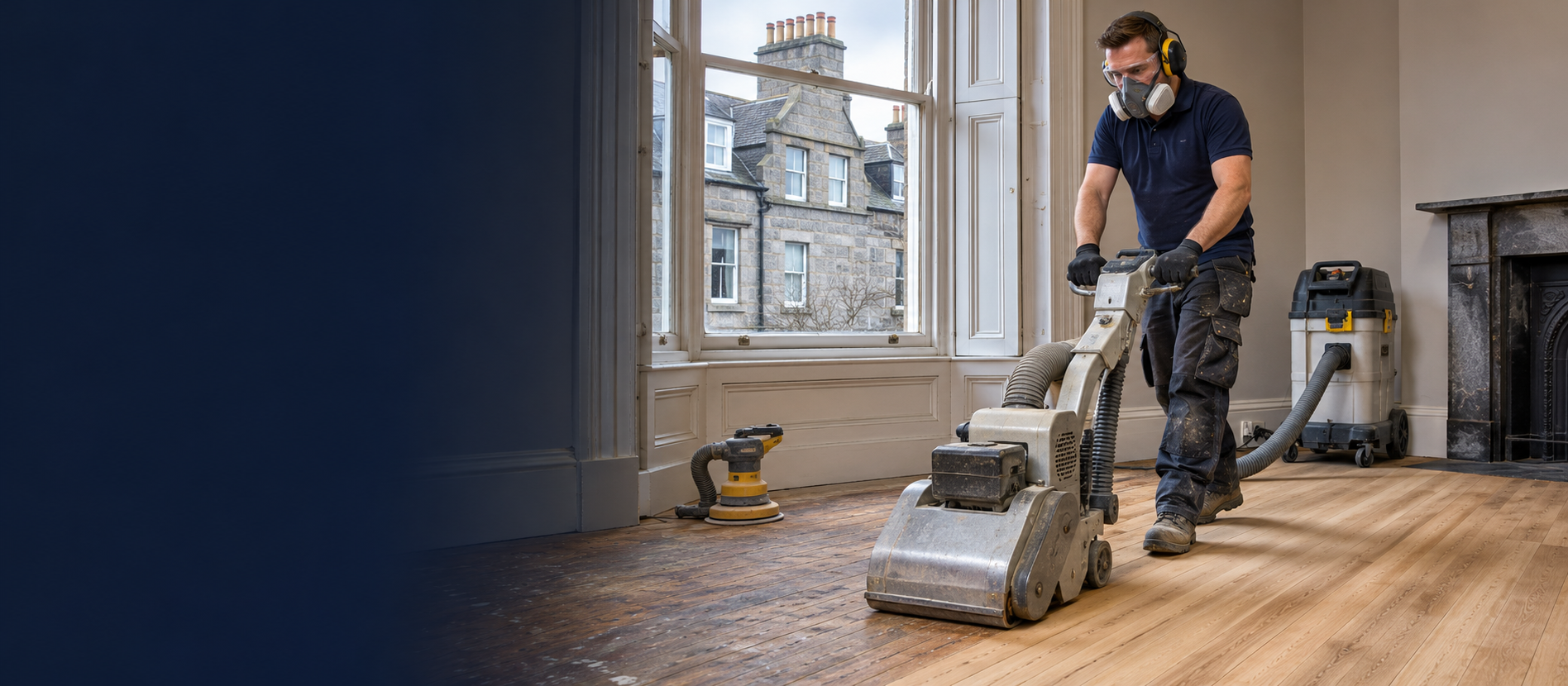
A timber floor can show years of use in a way that gives a room character, but deep scratches, worn finish and uneven staining may make ordinary cleaning insufficient. Sanding is a material-removal process, and its suitability depends on the floor's construction and remaining wear layer. Nova Clean Aberdeen discusses wood floor sanding and restoration for homes and commercial interiors across Aberdeen and Aberdeenshire. We begin by identifying the boards, previous coatings, damage and the result the owner wants before recommending any mechanical treatment.
An older floor in a granite tenement may contain solid boards with gaps and past repairs. A newer engineered floor can have a thin top layer that may not tolerate another sanding. Laminate cannot be treated like timber at all. We ask for photographs of the full room, close views of damaged areas, the floor edge if visible and any information from the installer. A site assessment is often necessary because the depth of a scratch and the condition of the substrate are difficult to judge from an image.
Check whether the floor can be sanded
Solid timber may have enough depth for careful resurfacing, but previous sanding, protruding nails and uneven boards can limit the work. An engineered board has a defined wear layer, and removing too much can expose the core. A veneer, laminate or printed surface is not a candidate for ordinary sanding. We identify species where possible, the board construction and signs of movement before selecting equipment. If the floor is unstable, damp or badly cupped, the cause should be investigated first.
Loose boards, damaged joists and persistent moisture are repair matters. Sanding can make a surface flatter within reasonable limits, but it cannot correct structural movement or a leaking pipe. A client should tell us about past flooding, recurring damp, underfloor heating and any recent building work. The floor must be in a suitable condition for finishing; trapping moisture under a new coating can create further problems.
Decide whether cleaning, repair or refinishing is needed
A floor may look dull because of a layer of dirt or a worn topical product rather than damaged wood. A compatible deep clean may be enough in some cases. Isolated scratches or boards may need a repair or local treatment, although matching an old finish can be difficult. A whole-room sanding is a larger intervention that changes the surface more consistently. We discuss the visual goal, whether adjacent rooms should match and how thresholds will be handled.
Stains from water, pets, oil or old adhesive can extend below the surface. Sanding may reduce them, but deep marks may remain or require board replacement by a flooring specialist. We do not promise to remove every historic stain. A test area can show how the timber responds and whether a new stain or finish will make differences more or less visible.
Dust control and preparation of the room
Modern sanding equipment can be connected to extraction, but no practical process should be described as producing absolutely no dust. Rooms need preparation: furniture, loose textiles and vulnerable objects should be removed, and neighbouring areas protected as agreed. We ask about access, power, ventilation and whether occupants can avoid the room during work and curing. Doorways and skirtings may need protective measures, while existing fragile paintwork should be identified before equipment enters.
Edges and corners are treated with different machines from the open field. A low doorway, fitted kitchen unit or radiator can limit reach. We define whether stairs, landings, thresholds and skirtings are included. A quotation for one room should not imply every adjacent timber surface is being sanded. Waste dust and used abrasive materials are collected as part of a planned workflow.
Finish selection and the appearance of timber
A finish affects colour, sheen, maintenance and the time before a room can be used. Options may include compatible oils, hardwax products or water-based coatings, subject to timber and use. The selection should be made with a test and manufacturer instructions. A pale timber may darken when coated, and an old board may absorb product differently from a repair. We explain the likely variation rather than promise uniform colour across mismatched timber.
Coats need proper drying and curing time. Furniture, rugs and heavy traffic should not return simply because the surface feels dry to the touch. We discuss practical timing for a home or business and any ventilation requirements. An owner who needs the room the next morning should know whether that is compatible with the chosen system. A finish does not make timber immune to standing water, grit or impact.
Historic boards and careful local repairs
Older Aberdeen properties can have gaps, nail heads, filler, darkened edges and boards replaced at different times. Sanding them aggressively to achieve a new-looking surface may remove character and damage thin sections. We assess how much material can be removed and whether a gentler clean and finish is more appropriate. Any significant repairs, board replacement or heritage constraints should be discussed before work is priced. We do not assume that a historic floor should be made perfectly flat.
Where a board is loose or split, it may need fixing by a competent flooring trade before sanding. Filler can behave differently from wood when stained, so its appearance should be explained. An old floor's uneven colour may reflect age and use rather than removable dirt. A realistic result keeps the material's limits visible in the plan.
Commercial use and maintenance after restoration
A shop, hall or office may need the floor closed in stages. We ask about opening hours, furniture movement, entrances and the possibility of keeping people away during curing. Grit at thresholds will quickly wear a fresh finish if matting and cleaning are neglected. A maintenance routine should use compatible products and avoid excessive water. Our office cleaning service can be coordinated for surrounding spaces, but the new floor finish needs its own care instructions.
After builders cleaning should occur before final finishing where dust remains, while a final light clean may follow once trades have left. Our after builders cleaning guidance covers construction residue. Scheduling matters because fresh joinery work or painting near a new floor can put the finish at risk.
Measure the wear layer and inspect hidden problems
Before sanding, the floor must be identified as solid timber, engineered board or a different product with a wood appearance. An engineered floor can have a thin top layer that may not support another sanding pass. We look at accessible edges, thresholds and any supplier information, then check for previous sanding, deep gouges, lifted boards and exposed fixings. A machine cannot safely remove unlimited material. If a damaged section needs replacement, that repair must be planned separately and the owner should understand that new timber may not match the older boards immediately.
Movement and moisture are equally important. Gaps may vary with the seasons; a damp subfloor can undermine a fresh finish. We ask about leaks, condensation, underfloor heating and any boards that feel soft or unstable. Sanding a floor while the cause of moisture remains unresolved risks a short-lived result. Where a survey suggests structural or building defects, the prudent step is to address those first. Our quotation should state the conditions on which the proposed restoration depends.
Set expectations for colour before the first machine pass
The colour seen before work may come from old varnish, stain, sunlight and accumulated wear. Removing the coating can reveal timber with a different tone, old filler, darker repairs or boards from more than one batch. A small sample can help the owner choose an approach, but natural variation will remain across the room. Deep stains may extend below the safe sanding depth. We explain that a uniform factory-like appearance is not guaranteed when restoring an older floor with its own history.
Finish choice affects appearance and use. An oil, hardwax oil or lacquer may have different sheen, maintenance and repair characteristics. Compatibility depends on the wood and any remaining treatment. The owner should consider pets, footwear, spills and how soon the room must return to service. We discuss the product system and its care instructions rather than selecting solely from a photograph of a preferred colour. A sample area is particularly useful beside original skirtings or adjoining rooms.
Dust control, room preparation and adjacent areas
Modern extraction can reduce airborne dust, but no sanding process should be described as entirely dust free. Furniture, curtains and loose objects need to be removed or protected. Doorways, ventilation grilles and nearby sensitive equipment may require temporary isolation. We ask whether the building has shared corridors or neighbours who need notice. A room above an occupied flat or beside a working office may need a restricted schedule. The access route for equipment and the location for waste collection should be agreed before the visit.
Edges and corners require separate attention after the open area is sanded. A radiator, fixed cabinet or narrow doorway may limit what can be reached. We identify those boundaries in the scope. Old nails and staples should be dealt with before abrasives pass over them, and loose boards must be secured by a suitable trade where necessary. After sanding, the floor is cleaned carefully so that dust does not become trapped in the finish. This stage is part of quality control, not optional housekeeping.
Allow enough time between coats and before normal use
The programme includes preparation, sanding, any filling or repair, application of the chosen finish and its drying or curing stages. A floor may be touch dry before it is ready for furniture, rugs or intensive foot traffic. Temperature, ventilation and product instructions influence the schedule. We give practical handover guidance based on the chosen system, and we ask owners not to place protective plastic or heavy furniture on a coating too early. A rush to reopen can mark the surface and undo careful work.
Commercial premises may need the floor returned in phases. The route for staff and customers should remain clear, and a staged finish can create visible joins if not planned properly. If the building also needs building deep cleaning, schedule dusty work first and final cleaning after the coating is ready. The scope should clarify who moves fixtures, how the room will be isolated and what happens if an unexpected repair changes the programme.
Care for a restored floor in Aberdeen's changing conditions
Entry mats help limit the grit carried in from wet pavements, while furniture pads reduce point scratches. Spills should be cleared promptly with a product suitable for the finish; excess water can affect joints and boards. Sunlight may continue to change colour, especially where a rug or furniture blocks part of the floor. Owners should follow the finish manufacturer's maintenance guidance and avoid abrasive pads. The finish may eventually need local maintenance or a refresh rather than another full sanding.
A handover record can note the product applied, the date, any areas that retained deep marks and the care period before normal use. Photographs in consistent light make later comparison easier. We distinguish timber restoration from general floor cleaning so that a quotation does not conceal work that was never agreed. The best result respects the amount of sound timber available and the character of the property.
Aberdeen enquiries and a useful quotation
We discuss floors in city centre flats, Rosemount and Ferryhill tenements, homes in Bridge of Don, Cove Bay and Cults, and commercial premises around Dyce, Westhill, Portlethen, Stonehaven and Inverurie. Send the postcode, room dimensions, photographs, likely floor type, history of sanding, visible damage and desired finish. Tell us when the room must be back in use and whether furniture can be removed.
Call 0845 52 805 20, email