Rug cleaning in Aberdeen and Aberdeenshire
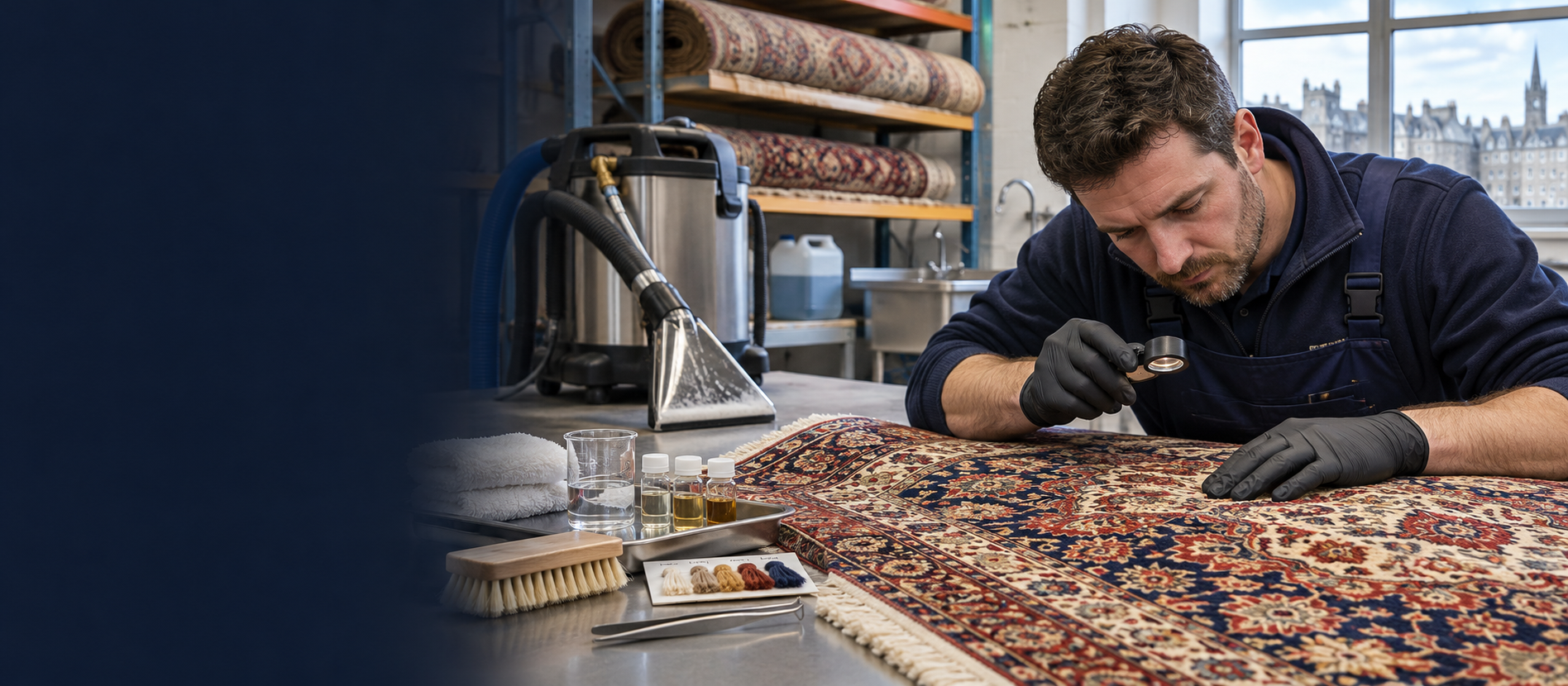
A rug can carry years of fine grit while its visible pattern still looks bright. It may also have dye that moves with moisture, a backing that should not be saturated or a fringe that reacts differently from the field. Nova Clean Aberdeen discusses rug cleaning as a separate assessment from fitted carpet cleaning. We ask about the construction, fibres, dyes, backing, age and cause of soiling before choosing a method. The aim is to remove suitable soil while protecting the rug's structure and explaining what stains or wear may remain.
Movable rugs in Aberdeen homes and workplaces range from modern machine-made pieces to hand-knotted wool, flatweaves and delicate older textiles. A photograph of the front alone rarely tells the whole story. We ask for images of the reverse, label, edge, fringe and any affected area. A rug with a pet accident, a drink spill or water exposure needs different attention from one with ordinary traffic soil. We may recommend a specialist assessment rather than a general clean when the fibre or colour stability is uncertain.
Identify construction before applying moisture
A tufted rug may have adhesive and a secondary backing that can weaken or release odour when over-wet. A woven or hand-knotted piece has a different structure and may allow soil to sit deep in the foundation. Natural fibres such as wool, cotton, silk or jute react differently from synthetic yarns. A label can help, but it may be missing or inaccurate; a visual and tactile assessment remains important. We check the binding, fringe and signs of previous repairs before moving the rug.
Colourfastness testing is particularly relevant where strong reds, blues or dark borders meet pale areas. A dye that transfers under a damp test may limit the available method. Old stains can also cause colour migration after cleaning. We discuss these risks before treatment rather than promising that every rug can be fully washed. A small test cannot reveal every hidden issue, but it can inform a safer decision.
Dry soil removal and the reason it matters
Fine grit acts like an abrasive when people walk across the rug. Removing it before wet treatment reduces the risk of pushing it deeper into the fibres. The appropriate vacuuming or dust removal method depends on the rug's strength and fringe. Beater bars and aggressive suction may damage loose fibres or a fragile foundation. A rug with a weakened edge should be handled gently and may need repair before cleaning.
We ask how the rug has been used, whether shoes are worn on it and whether the floor beneath is damp. Soil from a busy entrance differs from dust in a quiet sitting room. If there is a persistent musty smell or evidence of water damage, the underlying moisture source must be assessed. Cleaning a rug while it returns to a damp floor will not solve that problem.
Spills, odours and realistic stain limits
A fresh spill is easier to assess when the client tells us what it was and how it was treated. Food colouring, tea, wine, oil, pet urine and cleaning product residue have different effects. Blotting excess liquid with a clean absorbent cloth may help, but vigorous rubbing can spread pigment or distort the pile. Do not apply an unknown stain remover to a valuable textile without testing; a strong product can make a temporary mark permanent or strip dye.
Pet contamination may reach the backing and floor beneath. Treating the visible surface alone may leave an odour source inside the rug. We ask about the extent and whether the accident happened once or repeatedly. Some staining and dye change cannot be reversed, even after the contamination is removed. A restoration claim should be based on the rug's condition, not on an assumption that a cleaning product can recover lost colour or repair worn fibres.
In-home work and off-site possibilities
Some rugs may be cleaned in place with a controlled method if the surrounding floor can be protected and the textile can dry safely. Others benefit from removal for a more detailed process and even drying. We assess size, weight, furniture, access through stairs and whether the rug can be rolled without damage. A large or fragile piece may require more than one person and careful packaging. Transport and off-site handling, if offered for the specific job, must be agreed separately in the quotation.
A rug should not be placed back on a floor before it is dry, particularly over timber, laminate or a moisture-sensitive finish. We discuss drying conditions and the practical time available. If the piece is too fragile, bleeding or structurally unsound for the proposed process, a textile conservator or specialist may be the appropriate route. Cleaning should not be used as a substitute for repair.
Fringes, edges and visible wear
Fringes can be part of the rug's structure or attached as a decorative finish. They collect dirt and may have a different fibre from the main field. Excessive bleaching or brushing can weaken them. We inspect the edges and explain what can be safely cleaned. A loose binding, worn pile or old moth damage remains after soil removal and may become more visible on a cleaner surface. The client should distinguish this from a failure to clean.
Heavy furniture can flatten pile and cause shading that changes with the direction of light. Some rugs also have natural variation in colour and nap. We cannot promise a perfectly uniform appearance. Photographs before treatment help record existing wear and make the handover clearer.
Rugs compared with fitted carpets
Fitted carpet is installed against the floor and usually cleaned in place; a rug can often be examined from both sides and may need a different drying or handling route. Our carpet cleaning service covers fitted carpets and larger installed areas. If a property contains both, describe each material separately. A single room may include a natural-fibre rug over a synthetic carpet, and using the same chemistry on both would be unwise.
For an end of tenancy or property handover, tell us whether rugs belong to the tenant or remain with the property. The inventory, age and any pre-existing staining help set the expected result. A cleaner can describe the treatment performed and limitations observed, but cannot guarantee a deposit decision or an appraisal of the rug's value.
Rug backing and colour stability govern the first decision
A loose rug can look straightforward from above while its backing tells a different story. Adhesives, latex, stitched fabric, natural fibres and older repairs may all respond differently to moisture. We inspect both sides and ask whether the rug has been stored damp, cleaned previously or exposed to a leak. A small colourfastness check in an inconspicuous area can help reveal dye movement, but it does not guarantee every colour in a patterned rug will behave identically. If the construction is uncertain, the prudent choice may be to limit the method or recommend a specialist textile workshop.
Edges and fringes deserve particular attention because they often show more wear than the field of the rug. A fringe may be part of the rug's foundation rather than a removable trim. Pulling it, bleaching it or running a powerful machine across it can cause lasting damage. We document loose yarns, holes and faded sections before treatment. Cleaning can remove suitable soil, but it cannot rebuild missing fibres or reverse sunlight fading.
Plan dust removal around the material, not a fixed cycle
Dry grit collects at the base of a pile and can abrade fibres whenever the rug is walked on. Controlled vacuuming may be appropriate before any wet treatment, but suction and agitation should match the weave and condition. A thick modern synthetic rug can tolerate different handling from a delicate hand-knotted piece with weak areas. We consider whether both faces need attention and whether lifting the rug is safe. Underlay can hold additional dust or moisture and should be inspected separately rather than assumed to be clean because the top looks presentable.
Some rugs need to be moved from their position so that the floor below can be checked. A damp patch underneath could come from a spill, condensation or a building issue. Cleaning the textile without addressing that source may lead to renewed odour or staining. If the rug sits on timber or stone, we protect the floor during treatment and drying. We do not promise to wash a rug in place when its backing or surroundings make that unsuitable.
Spill history helps set realistic stain expectations
Tea, coffee, wine, pet contamination and cleaning products each leave different residues. How long the spill remained, whether it was rubbed and what was applied afterwards can matter more than the initial colour. An unknown stain cannot be diagnosed reliably from a photograph alone. We test cautiously and explain when a mark may be permanent, when dye may have changed and when an odour source may remain in the backing or underlay. Strong treatment can cause more harm than the visible stain in a valuable or unstable rug.
For a fresh spill, owners can avoid scrubbing and keep a record of the substance and any product used. A soaked rug should not be left folded or rolled for a long period, as trapped moisture can affect the backing and the floor. If the incident involves floodwater or potentially contaminated water, tell us before anyone handles it. The assessment may then involve safety and building drying as well as textile cleaning, with a separate scope for each activity.
Drying is part of the treatment, not an afterthought
A rug may feel dry at the tips while moisture remains at the foundation. The drying plan depends on fibre, thickness, ventilation, room temperature and whether the rug can be moved. We discuss whether people and pets can stay off it, how to protect the floor and when it is reasonable to return furniture. A heavy rug placed back on a damp surface can trap moisture and encourage odour. We avoid a universal promise that every rug will be ready for normal use after the same number of hours.
In a managed flat or holiday property, access arrangements can make drying harder. If the room must be handed over quickly, we may recommend a less moisture-intensive method or a staged approach, subject to the material and the desired result. A quotation should state the method proposed and the practical conditions needed for drying. Where collection and workshop treatment would be safer, that should be discussed as a different service rather than implied by an in-home price.
Compare treatment options with the rug's value and use
A robust entrance rug, a decorative silk blend and an inherited handwoven textile do not justify the same risk. We ask about age, maker information if available, sentimental value and intended use. A delicate piece may warrant independent conservation advice before any cleaning attempt. Even a modestly priced rug may be important to its owner, so consent should be based on clear method and realistic limits. A pre-treatment photograph records the starting condition for both sides.
Regular care can reduce abrasive soil between deep cleans. Rotate a rug where appropriate to distribute wear and sunlight exposure, use a suitable underlay, and vacuum at a setting compatible with the pile and fringe. These steps do not replace treatment after a significant spill, but they can help preserve the textile. If the surrounding fitted carpet also needs work, carpet cleaning should be quoted separately because access, backing and drying conditions differ.
Preparing an enquiry from Aberdeen and nearby towns
We discuss rugs in city centre flats, homes in Rosemount, Ferryhill, Bridge of Don, Cove Bay and Cults, and properties around Westhill, Portlethen, Stonehaven and Inverurie. Send the postcode, approximate rug dimensions, photographs of front and back, label if present, fibre information and a clear description of stains or odours. Tell us whether the rug has been cleaned before and what products were used on it.
Call 0845 52 805 20, email