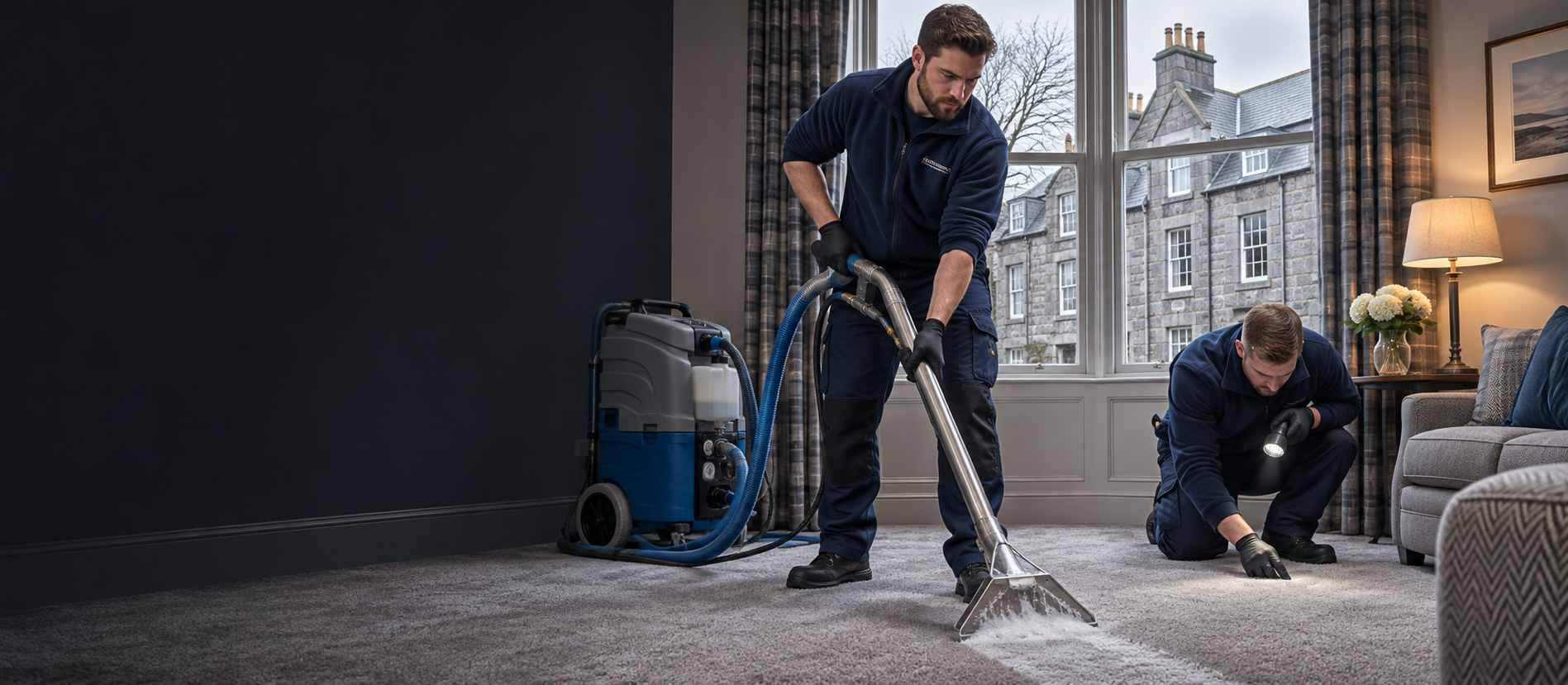
Carpet cleaning in Aberdeen and Aberdeenshire
A carpet can look uniformly dull when its fibres hold fine grit, tracked-in soil and residue from everyday use. One dark mark may also hide a completely different problem from the surrounding traffic lanes. Nova Clean Aberdeen discusses carpet cleaning for homes, offices, rental properties and managed spaces with attention to fibre type, backing, colour stability and drying conditions. We do not assume that every carpet can be safely treated with the same machine or that every old stain will disappear. A useful plan begins with the condition of the actual floor covering and the result the client needs.
Our service enquiries include Aberdeen city centre, Rosemount, Ferryhill, Torry, Bridge of Don, Dyce, Cove Bay, Westhill, Portlethen, Stonehaven, Inverurie and nearby Aberdeenshire communities. Coastal weather brings damp footwear and grit into entrances; busy offices have concentrated traffic routes; older granite flats can have limited ventilation and stairs that shape equipment access. We confirm coverage and the scope for each address rather than promising a treatment before the material has been assessed.
Inspect the carpet before selecting a cleaning method
The first questions concern the fibre, construction, backing, age, previous treatments and any visible damage. Wool, synthetic fibres, blended piles and natural materials do not respond alike to moisture, heat or cleaning solutions. We look for loose seams, worn traffic lanes, colour movement, delamination, watermarks and furniture marks. Some defects are permanent or require a carpet repair specialist. A small test area may help establish whether a stain can be treated without spreading it or changing the colour.
Tell us if the carpet has recently been installed, if there is underfloor heating, if a spill has reached the underlay or if another contractor has used a product on it. Stain history is valuable, but an unknown mark can still be investigated cautiously. Where the backing or underlay is affected by persistent moisture, surface extraction alone may be insufficient. We explain when cleaning is suitable and when further assessment is more sensible.
Dry soil removal comes before wet treatment
Fine grit and dust can abrade fibres as people walk on them. A thorough initial vacuum of accessible areas removes as much loose material as practical before spots are treated or moisture introduced. Edges, entrances and stairs often deserve particular attention. We ask what furniture can be moved, what must remain in place and whether personal items can be cleared from the floor. A quote should state whether furniture movement and cleaning beneath it are included.
Using water before dry soil is collected can turn dust into a residue that is harder to extract. A staged approach may include pre-treatment, controlled agitation where compatible, extraction and a final inspection. The precise sequence depends on the carpet. We avoid describing one standard recipe as appropriate for delicate wool, low-pile office carpet and a heavily soiled synthetic hallway alike.
Stains, spots and the limits of removal
Spills can set into fibres, alter dyes or leave a residue that attracts new soil. Coffee, tea, oil, paint, pet accidents and old cleaning products present different challenges. A technician considers the likely source, time since the spill, previous attempts and how the material responds to a test. Rubbing an unknown stain aggressively can enlarge it or damage the pile. We discuss realistic expectations before applying a targeted treatment, particularly where the colour itself has changed.
A pale patch may be bleaching rather than a removable stain. A dark line may reflect permanent wear, filtration soil or contamination from below. Some spots can improve substantially while a faint trace remains. Our aim is to use a compatible method and explain the result honestly. If the client needs a uniform appearance for a tenancy handover, we distinguish what cleaning can achieve from what repair or replacement would require.
Extraction, moisture control and drying conditions
Where the carpet permits it, professional extraction can help lift soil and treatment residue from the pile. Water and solution must be controlled so that the backing and floor beneath are not unnecessarily saturated. More liquid does not mean a better clean. We consider the room temperature, airflow, pile depth, previous water exposure and the ability to ventilate. The property should remain accessible during the drying period, and people should avoid replacing furniture too soon where moisture may transfer.
Drying time varies with material, soil level, ventilation and weather. Aberdeen's cool or humid conditions can extend it. We do not promise a fixed number of hours for every carpet. Before work, tell us if the heating is off, windows cannot open or a room must be used immediately. Those constraints can change the method or timing. If a carpet remains damp longer than expected, the cause should be assessed rather than concealed with fragrance.
Carpet cleaning after a tenancy or refurbishment
A landlord or managing agent may require a record of cleaning before the next occupant moves in. We ask for the inventory, the rooms included and any condition report that shows existing marks or wear. Cleaning can address accessible soil, but it cannot reverse flattened pile, burns, dye loss or damage to the backing. A written scope helps the owner and tenant understand what has been treated and where a separate repair may be needed.
Following building work, fine plaster dust can settle deep into the pile. The construction activity should be complete before the final clean, with heavy debris removed by the contractor. If paint or adhesive has reached the carpet, we assess it separately. A broad extraction pass may improve overall appearance but will not automatically resolve hardened construction materials. Our after builders cleaning discussion can cover the wider property while the carpet is assessed as its own material.
Offices, shared areas and commercial footfall
Office carpets often have defined traffic lanes from entrances to desks, while meeting rooms have different soil patterns. We ask whether desks can be moved, whether cables or floor boxes are present and which hours are available. An office may need phased cleaning so staff can use another area while one zone dries. A building manager may set access rules for equipment, lift use or waste water. These practical details belong in the proposal.
Common corridors and stair carpets in managed blocks require a plan for residents to pass safely. Notices, working hours and temporary restrictions may need agreement with the managing agent. A small test can show whether a heavily worn route will clean evenly with adjacent low-use areas. We discuss the visual limits of a clean where pile has been compacted over years. The result should be evaluated against the condition of the carpet, not a new sample of a different material.
Pet-related odours and hidden sources
Pet accidents can penetrate beyond the visible pile into backing or underlay. Surface treatment may reduce a mark without resolving a deeper source of odour. We ask about the number and location of affected areas, previous cleaning and whether the carpet can be lifted or inspected by an appropriate contractor if needed. Products should be compatible with the fibre and used with proper contact and extraction, not simply sprayed as a perfume.
Persistent odour can also come from damp building materials, a leak, contaminated underlay or a source elsewhere in the room. Cleaning the carpet should not be presented as a substitute for fixing a leak or replacing damaged material. We explain the likely limits based on the information available and may recommend an on-site assessment before a fixed treatment plan. This is particularly important in older properties where hidden moisture can be mistaken for a carpet-only issue.
Furniture, delicate items and preparation for the visit
Clearing small objects and breakables from the floor gives a team space to work and reduces the risk of damage. Please identify heavy furniture that cannot be moved, cables, loose thresholds, fragile rugs and rooms with restricted access. If a desk, bed or sofa must stay in place, we can describe which carpet areas will remain inaccessible. Some furniture feet may need temporary protection after cleaning to prevent marks during drying. We ask the person in charge to agree this before work begins.
For a home with children or pets, plan where they can stay during treatment and while the carpet is damp. For a business, decide who can approve access and when the room may return to use. We do not remove electrical equipment, disconnect fitted appliances or shift very heavy pieces without a separate agreement. A realistic preparation checklist makes the appointment more efficient than trying to make these decisions while the machine is already running.
What determines the quote for an Aberdeen carpet clean
Area alone is only one factor. Room layout, stairs, furniture, fibre type, level of soil, number of targeted stains, access to water and power, parking and drying constraints all affect the work. We may ask for photographs and dimensions, then confirm whether a visit is needed. A quote should list the rooms and explain the treatment proposed, any spot work, furniture assumptions and exclusions. A heavily stained carpet may require a separate discussion rather than a guaranteed result attached to a standard room rate.
Tell us the postcode, property type, number and size of rooms, floor level, approximate age of the carpet and any known fibre or care label. Describe spills, odours, water exposure or previous treatments and provide safe photographs if available. For an office or block, add access hours and the person who can approve temporary closure. This information helps us plan a suitable method and a clear scope.
Rugs, upholstery and textile boundaries
A rug resting on a carpet is a separate textile with its own fibre, dyes, backing and fringe. We ask whether it should be moved for access, assessed for cleaning or left untouched. A delicate or valuable rug may need specialist off-site care rather than the same extraction process used on a fitted synthetic carpet. Upholstered furniture is also a distinct task; cleaning the carpet around a sofa does not include treatment of its fabric. Listing these items explicitly avoids confusion when the team arrives.
Colour transfer from a rug or furniture leg can leave marks on the fitted carpet. We inspect accessible areas and ask about previous spills beneath furniture, but cannot guarantee that a stain hidden until an item is moved can be removed. If the room contains fragile antiques or electrical equipment, protection and access should be agreed before work. The scope can be expanded after assessment, with the method and cost clarified first.
Looking after a carpet between professional visits
Regular vacuuming with equipment suitable for the pile helps remove abrasive soil before it is ground in. Entrance mats can reduce tracked-in grit, especially in wet coastal weather, but mats also need cleaning and should not trap damp against a floor. Deal with a fresh spill promptly by blotting with a clean absorbent material, avoiding aggressive rubbing. Test any product according to the manufacturer's care advice and do not mix unknown treatments. If the spill is large or reaches the backing, professional advice is more useful than repeated soaking.
Furniture placement and foot traffic affect wear independently of cleanliness. Rotating small movable furnishings, protecting high-use entrances and addressing a leak early may help preserve the floor covering. A professional clean is most effective as part of ongoing care, not as a way to reverse permanent abrasion. We can point out areas where the pile is worn or colour has been altered so that the owner has a realistic plan for maintenance or replacement.
Handover checks after the carpet has dried
The immediate post-clean appearance may change slightly as the pile settles and remaining moisture evaporates. We recommend reviewing the treated rooms after drying in ordinary light, noting any persistent marks and whether there is a continuing source of odour or damp. A return inspection may be appropriate if a stain reappears, but the cause should be identified before repeating a treatment. Soil from the backing, residue from an older product or a fresh spill can all look different.
For managed premises, keep the agreed room list and note which areas were inaccessible. This record supports a fair comparison with the original scope and helps distinguish cleaning from repairs. We describe what was treated and any limitations observed, including permanent wear or suspected damage beneath the carpet. A clear handover is more useful than a claim that every material will return to its original condition.
Discuss a fibre-aware cleaning plan
Call 0845 52 805 20, email