Balcony and terrace cleaning in Aberdeen and Aberdeenshire
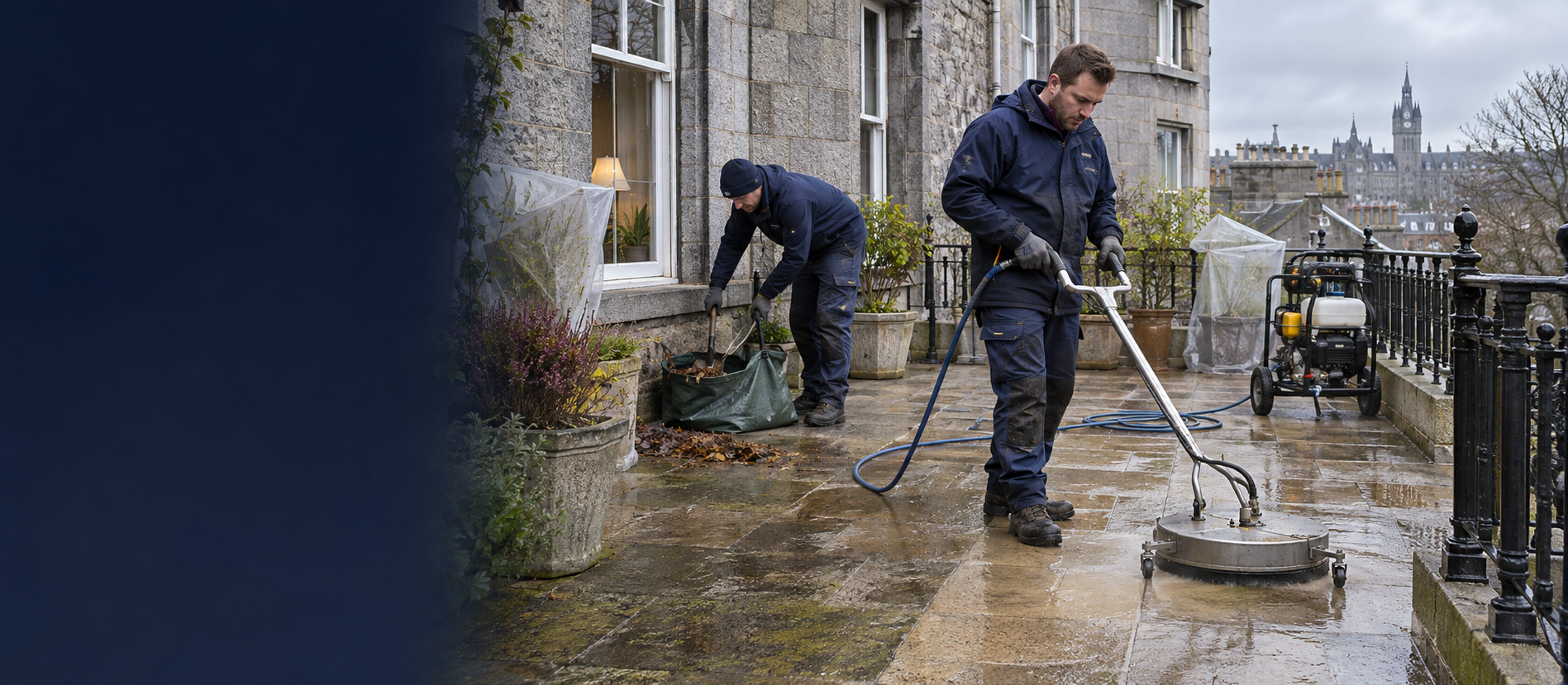
A balcony or terrace may be small, but it often has more cleaning constraints than a much larger garden path. Water can pass through a floor joint onto a neighbour, a drain may be blocked by leaves, and a painted railing can react differently from the stone or composite beneath it. Nova Clean Aberdeen discusses balcony and terrace cleaning for homes, managed apartments and commercial premises in Aberdeen and Aberdeenshire. We assess the surface, access, drainage and what lies below before selecting a method.
Outdoor spaces in the north east face rain, windblown grit, salt and periods of shade that encourage algae. The visible deposit may be removable, but a coating worn through by years of weather will not be restored by washing. We ask what the client wants to achieve: a safer walking surface, removal of moss, preparation for use, treatment of a spill or a clean before a tenancy handover. The answer determines the work and the limits that should be stated in the quotation.
Start with the layout and the route of water
Send photographs of the entire space, floor finish, edge, balustrade, door threshold and any outlet. A ground-level patio can often be approached from a garden, while a fifth-floor balcony may require access through an occupied flat. We ask whether the outlet drains to a shared system or directly over another area, and whether there are cracks, loose tiles or staining on the ceiling below. Cleaning should not conceal a waterproofing defect. If water is already entering the building, the owner should arrange a building assessment before a wet clean.
Furniture, planters and stored items should be moved only with agreement. A heavy container may sit over a delicate coating or conceal a cracked tile. Clear the area where possible and tell us what must remain. If there is significant rubbish or abandoned belongings, house clearance and decluttering is a separate service with its own authorisation and disposal plan.
Stone, tile, concrete, timber and composite decking
A stone terrace may include natural stone, manufactured slabs, grout and sealing products. The strongest-looking component is not always the most sensitive. Acidic products can affect certain stones, aggressive pressure can erode joints, and standing water can leave marks. We use material information and a test area where needed. Aberdeen granite may be durable, but adjacent mortar and repairs require care. A uniform new appearance is not a reasonable promise when the stone itself has weathered unevenly.
Ceramic tiles may have a textured anti-slip surface that holds algae and dirt in recesses. A damaged grout line or hollow tile may worsen under forceful washing. Painted concrete and resin coatings can lift if poorly bonded. Timber decking needs restrained moisture and attention to splinters, fixings and any existing finish. Composite boards have manufacturer-specific restrictions and may show scratches or colour change if treated abrasively. We ask for the product specification when available and do not apply a single chemical to all materials.
Algae, moss, food marks and other deposits
Green growth often gathers in shaded joints or where planters hold moisture. Removing loose material and soil may improve grip, but regrowth can occur if shade and drainage remain. We explain the likely result of a compatible treatment without promising a permanent cure. Food and drink spills, barbecue grease and rust from furniture each require a different approach. An old oil mark may have penetrated porous stone; a clean surface can still retain a discoloured patch.
Pigeon deposits on a balcony need controlled handling, especially if dry material has built up on railings or near a doorway. Our pigeon guano removal service addresses collection and contamination separately from ordinary terrace washing. If birds continue to roost, a clean alone will not prevent recurrence. We discuss access, occupants below and whether a specialist assessment of proofing is needed.
Protect neighbouring homes and ground-level areas
In a shared building, water and loosened debris can reach a lower balcony, window or entrance. We ask whether the factor or landlord must authorise the work and whether neighbours need notice. A controlled method may use less water, local collection or manual detailing rather than an unrestricted pressure washer. The balustrade, exterior electrical fittings and door seals should be protected. We do not treat a balcony as an isolated slab when it is part of a building envelope.
At ground level, protect planting, ponds, soft landscaping, vehicles and adjacent walls. A terrace next to a rendered façade or timber door may need a gentler edge treatment. Surface runoff should be directed toward an appropriate outlet, and the team should not wash collected debris into a drain that is already obstructed. If the main problem is a blocked outlet, that maintenance issue should be addressed first.
Access, drying and the next use of the space
Weather can change the schedule. A windy day may carry spray beyond the work zone, while heavy rain can obscure the result or delay drying. We plan for safe conditions and agree when the area can be used again. A wet tiled balcony may remain slippery even after the visible soil has gone. Furniture should not be returned to a surface that still needs to dry or cure after a compatible treatment. If a sealant or coating is requested, that is a separate specification with its own preparation and curing requirements.
For a high balcony, the team needs a safe route through the building and a plan for equipment and water. A narrow stair, lift restriction or occupied room can affect the time needed. A commercial terrace may have service hours and public access to manage. We confirm who will be present for entry and who can review the work at handover.
Terraces before a tenancy or sale
A tenant or agent may need an outdoor space cleaned before an inventory inspection. Share the starting condition, checklist and any photographs, and distinguish loose soil from damage or an old coating. Cleaning cannot repair a leak, replace a broken slab or guarantee a deposit outcome. If the indoor property also needs attention, our end of tenancy cleaning service covers its separate scope. Scheduling both together may simplify access, but each area should be listed in the quote.
A property owner preparing for viewings may want an even appearance, while a manager may prioritise slip risk and drainage. The assessment can explain where stains are likely to remain and whether a repair or re-coating would be needed for a uniform finish. A small test patch is valuable on older stone or a coated surface.
Check the waterproofing and drainage before washing
A balcony is part of a building envelope. Its surface can look solid while joints, outlets or upstands have defects that allow water to reach the room below. We ask about previous leaks, ponding after rain and any restrictions from the factor or managing agent. A cleaning team cannot certify waterproofing, but it can avoid directing large volumes of water toward a known weak point. If the outlet is blocked by loose debris, the owner should agree whether clearing accessible material is included. Structural repairs and drainage alterations require a separate competent trade.
On a terrace above occupied space, the route of runoff matters as much as the cleaning product. We discuss whether water can be collected or used in limited amounts, where it will flow and whether there are neighbours beneath. A small test area can show how the surface responds without committing the whole area to a method that might leave residue or move staining. The proposal should state what protection is planned for doors, thresholds and adjoining walls.
Timber decking needs a different approach from masonry
Natural timber can be worn by excessive pressure or aggressive brushing. Its grain may rise, fixings may loosen and an old coating may peel when treated. We inspect boards, railings and gaps, then distinguish ordinary soil from grey weathering or failed finish. Cleaning can lift suitable deposits but will not restore colour where the timber has aged through its depth. If recoating is desired, the material must dry and be prepared according to the product's instructions. That is a separate scope from a basic clean.
Composite decking has its own manufacturer guidance. Some products can hold grease stains or show scuffs that will not rinse away. A hidden test helps identify whether a cleaner affects the colour. We also consider what lies beneath the boards. Spraying through gaps may send dirty water into a neighbour's area or a concealed drain. An apparently simple terrace can therefore need careful control of runoff and more hand detailing than an open paved yard.
Glass balustrades, metal rails and furniture
A terrace may include glazing, aluminium, painted steel and stone in a small footprint. The materials need separate compatible methods so that a product suitable for the floor does not mark a railing or leave a film on glass. We ask whether balustrades are included, and whether both faces can be reached safely without leaning beyond an edge. Cleaning the visible inside of a glass panel does not imply access to its outer face. For high balconies, an external access plan may be necessary.
Planters, grills and outdoor furniture often conceal soil. We agree what the owner will move before the team arrives, or whether moving robust items is part of the quotation. Heavy pots can leave rings and damage beneath them; some marks may be permanent. We document fragile items and protect electrical lighting. A cleaning crew should not move an unsafe railing, disconnect fixed appliances or disturb a waterproof membrane merely to reach a hidden patch.
Seasonal conditions in Aberdeen affect the result
Salt carried inland by wind can leave a film on exposed surfaces. Damp shaded corners may encourage algae, while leaf litter can block outlets in autumn. A terrace facing a busy road can accumulate traffic film in addition to ordinary dust. The right frequency depends on exposure, material and use. We can explain how to remove loose debris regularly without scraping a delicate coating, and when a fuller clean may be worthwhile. No treatment can prevent wind and rain from depositing new soil.
Freezing weather creates a particular hazard because water left on paving or steps can turn slippery. A visit may need to be postponed when conditions make safe rinsing or drying unlikely. On a warm day, a cleaner can dry too quickly and leave residues if large sections are treated at once. We plan manageable areas and check the appearance after drying rather than judge only the wet surface. Occupants should know when the terrace can be used again and whether furniture can be returned.
A clear handover helps owners and managing agents
Before work, photographs of the whole space and detailed marks can prevent confusion between pre-existing wear and removable dirt. The quotation should define floor area, balustrades, furniture movement, drainage control, access equipment and any specialist stain treatment. After cleaning, an inspection can check corners, outlets and the agreed vertical surfaces. If a stain is etched into stone or a coating is damaged, it should be recorded as a limitation rather than hidden under a wet finish.
For a move-out, coordinate terrace cleaning with end of tenancy cleaning so the property is checked against the inventory. For a restaurant terrace, schedule the work around trading and consider waste, food grease and customer routes. The final advice should identify when the area is dry enough for normal use and which materials may need repair or protection beyond cleaning.
Aberdeen areas and information for a quote
We discuss city centre flats, older properties in Rosemount and Ferryhill, coastal homes around Torry and Cove Bay, and managed sites in Bridge of Don, Dyce and Westhill. We also consider Portlethen, Stonehaven and Inverurie, confirming availability for the exact postcode. Building age, exposure and access vary widely within these areas, so photos and a clear description are more useful than location alone.
Send the address, approximate floor area, surface materials, photographs of the edges and outlet, access floor, position of any lower balcony, type of soil and preferred date. Call 0845 52 805 20, email