Flood and water damage cleaning in Aberdeen and Aberdeenshire
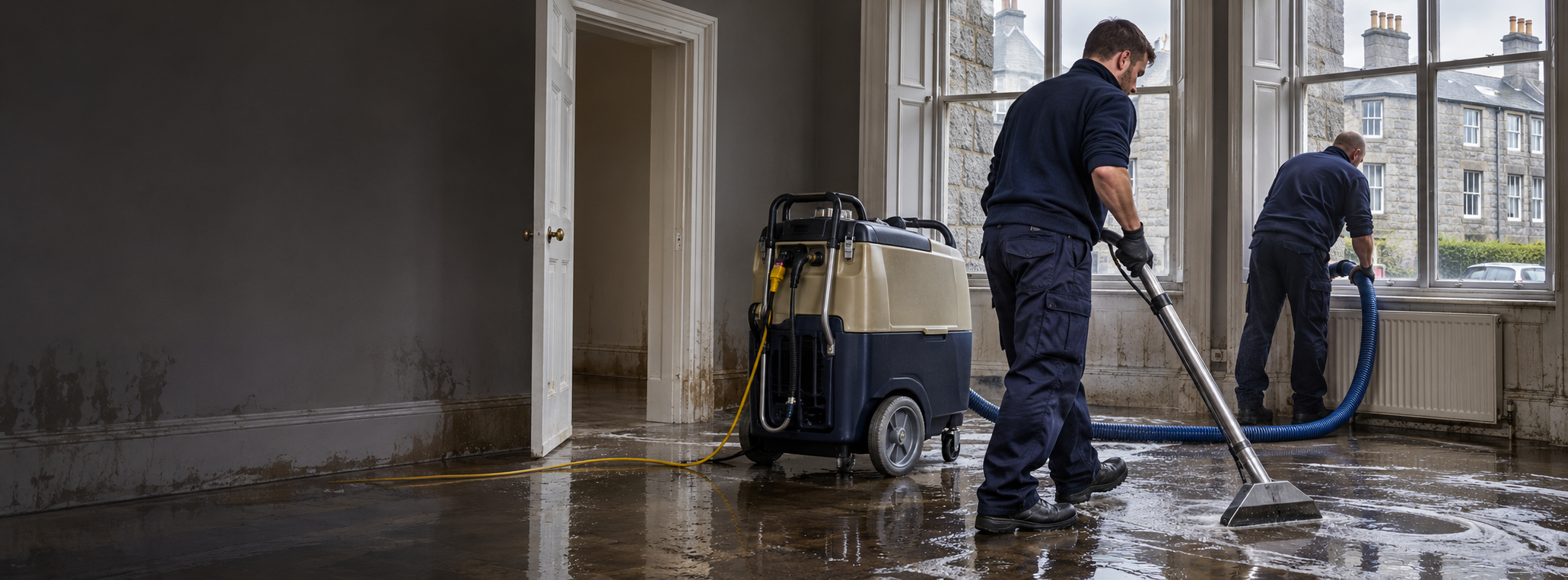
Water damage cleaning after a leak or flood in Aberdeen
A burst pipe in a Rosemount flat, water entering a ground floor property in Torry or a damaged roof over premises in Stonehaven can leave very different conditions behind. Nova Clean Aberdeen helps owners, tenants, housing providers and managers define the cleaning needed after the source of water has been stopped and the affected building made safe. Our work begins with a practical discussion of what was wet, how long it remained wet, which materials were affected and whether drying or building repairs are still in progress. A visibly dry floor is not evidence that the structure beneath it is dry. We therefore separate cleaning from leak repair, structural drying, electrical inspection and restoration, and make the boundaries of the proposed work clear before any appointment is agreed.
Tell us the Aberdeen or Aberdeenshire postcode, the type and approximate size of the premises, the rooms involved and the likely source of the water. Photographs can help with an initial conversation if it is safe to take them. A cleaning quotation may require a visit when the contamination, extent of damage or access cannot be assessed reliably at a distance. Families and business operators do not need to diagnose the building before contacting us. Clear facts about the incident and the outcome they need are enough to start.
First decisions before anyone starts clearing the affected rooms
Safety and authorisation come before an attempt to make the premises look tidy. A property may still have live electrical circuits near wet materials, unstable plaster, damaged ceilings or contaminated water. If a leak is continuing, the source must be isolated by the appropriate person. Where water entered from a drain, a sewer, an external flood or an unknown source, exposure risks differ from a clean supply-pipe escape. Do not handle suspect materials, operate wet electrical equipment or move heavy waterlogged furniture to prepare for a cleaner. If you are a tenant, tell the landlord or managing agent promptly; if the property is insured, follow the insurer's reporting and evidence instructions before disposal.
Keep a dated record of the incident, the rooms affected, the visible waterline and major damaged items where it is safe to do so. This helps separate the condition immediately after the escape of water from later changes. A photograph taken before contents are moved can also help an insurer or loss adjuster understand the original layout. We do not promise that every item can be cleaned or retained. The decision depends on material, time wet, contamination and the advice of the professionals responsible for drying or reinstatement.
Assessment of water source, contamination and building materials
Clean-water incidents can become more complicated over time as water passes through wall cavities, flooring systems and stored contents. Water from bathrooms, waste pipes or outdoor flooding may bring microorganisms, silt and debris into the building. We ask about the point of entry, how long water was present, whether it reached adjoining rooms or floors, and whether the affected area has been occupied since. We also ask which surfaces are porous: carpets, underlay, plasterboard, chipboard and soft furnishings behave differently from sealed tiles or intact metal.
Aberdeen buildings include granite tenements, modern flats, offices and rural homes with varied construction. In an older property, hidden voids, timber joists and existing finishes can complicate the apparent extent of damage. In a managed apartment block, access to shared services and neighbours' premises may matter. A site assessment should identify what cleaning can reasonably achieve without disturbing fabric that belongs in a separate drying or repair programme. When the source of water is uncertain or the building remains wet, the quotation is provisional until the relevant inspection is complete.
Cleaning sequence once the source has been addressed
Work should follow a defined sequence rather than begin with deodoriser or cosmetic wiping. The first stage is to agree boundaries, photograph the condition where required, identify belongings that must not be moved and protect unaffected routes through the property. Loose debris and damaged removable materials are then assessed. If removal is authorised, we distinguish retained contents from waste and explain how transport and disposal will be handled. Remaining accessible surfaces can be cleaned using methods suited to their material and the incident. A final inspection records visible results and any areas that could not be reached because they remain unsafe or require building work.
Disinfection, when appropriate, follows physical cleaning. Applying a product over silt, debris or a thick organic deposit does not replace removal of that contamination. Product choice, concentration and contact time depend on the surface and its intended use. We do not describe a room as fully decontaminated when voids, insulation or inaccessible materials have not been examined. If odour persists, we look for a remaining moisture or contamination source instead of assuming that fragrance will solve it.
Drying and cleaning are connected but separate tasks
Industrial drying equipment, humidity monitoring and moisture readings may be needed before decoration or floor finishes are restored. Cleaning while a wall cavity or flooring substrate remains damp risks repeated staining, odour and microbial growth. We coordinate our proposed cleaning stage with the drying contractor or other responsible professional when one is appointed. If no drying plan exists and the incident affected absorbent building materials, we will identify that gap so the customer can arrange a suitable assessment. We will not give a moisture clearance based only on touch or appearance.
Ventilation and heating may help some situations but must be appropriate for the building and the nature of the water. Opening a window in a cold, humid period is not a universal drying strategy, and turning on heating in a damaged electrical installation may be unsafe. Ask the professional managing the incident which equipment may operate and when occupants may re-enter. Our cleaning scope can be timed for the point at which surfaces are ready for treatment, with a later finishing clean after repairs if that is needed.
Carpets, upholstery, joinery and valuable belongings
Absorbent materials need individual decisions. A carpet and its underlay may have remained wet for different lengths of time; an apparently clean rug may have absorbed contaminated water below the pile. Upholstery can retain moisture in its filling while the cover feels dry. We ask what the item is made of, where the water came from, whether dye transfer or shrinkage is possible, and whether the value or personal importance justifies a specialist assessment. Some items can be cleaned after drying; others should be documented and considered for disposal with the owner's approval.
Timber flooring and fitted joinery can swell, cup or lose their finish. Aggressive scrubbing or strong chemicals can add damage to an already vulnerable surface. In a granite or stone property, salts may move through masonry as it dries, producing deposits that require careful identification before treatment. Electronics, documents, photographs, antiques and specialist equipment need their own recovery advice. We do not include electrical repair, document conservation or timber restoration in a general cleaning quotation unless expressly agreed and supported by a suitable specialist.
Commercial premises and coordinated handovers
An escape of water in a Union Street shop, a Dyce office or a kitchen near the harbour can affect trading and shared access as well as finishes. We ask which areas must reopen first, who controls isolation and access, whether stock has been inventoried, and whether the insurer or building manager requires records. Cleaning may be organised in phases to keep unaffected operations separate. Food premises, medical settings and buildings with sensitive records may have additional hygiene or security requirements that must be specified before a proposal is made.
A handover should say what rooms and surfaces were treated, whether contents were moved, what remains excluded and which further works are outstanding. We avoid promising that an affected business can reopen on a particular date before the building, utilities and relevant operational checks have been cleared by their responsible parties. This gives managers a useful written scope to coordinate trades rather than an ambiguous assurance based on appearance alone.
Keep records that separate the incident from the clean-up
When water enters a property, photographs and a simple timeline can help the owner, manager and insurer understand what happened. Record where water was first seen, when the source was stopped, which rooms were affected and what emergency steps have already been taken. Do not discard a damaged material merely because it looks unpleasant if a surveyor or insurer still needs to inspect it. At the same time, avoid leaving wet, unsafe contents in an occupied route. We agree what can be moved and who has authority to approve disposal.
Cleaning personnel can document accessible conditions, but they do not determine structural integrity or the full extent of moisture concealed behind walls. A specialist drying or building assessment may be needed. The cleaning scope should identify which surfaces will be cleared, washed or treated after the cause has been addressed, and which repairs or measurements remain another professional's responsibility.
Different water sources change the safety plan
Clean supply water, rainwater and wastewater should not be treated as if they have the same risk. We ask where the water came from, how long it remained and whether it crossed drains or contaminated areas. If the source is unknown, we plan cautiously until it can be clarified. Electrical safety, unstable ceilings and slip hazards need attention before staff enter. We avoid a blanket promise to disinfect all materials, because product choice, contact conditions and material suitability vary.
Porous belongings require separate decisions. A hard floor may be cleanable after drying, while a saturated carpet, underlay or plasterboard can retain moisture and contamination. We discuss what the owner wants to retain and what a specialist survey recommends. If a textile is important, early assessment may preserve options; prolonged damp storage may make later cleaning less effective. A quotation should show whether uplift, removal or specialist treatment is included.
Plan the return of an occupied building
A household may need a safe route through the property while one room remains isolated. A business may need to protect records, stock and equipment before cleaning begins. We ask which areas must reopen first and whether drying equipment or repair trades will continue to work. Cleaning too early can lead to repeat work if wet material is later removed or dust settles from reinstatement. A staged sequence can include initial clearing, cleaning of safe surfaces and a final handover clean once repairs finish.
At completion, the client can review the agreed rooms and receive a record of materials that remained stained, inaccessible or awaiting repair. A dry-looking surface is not evidence that a concealed structure is dry. We state that limit and encourage appropriate verification before finishes are closed. In Aberdeen's cooler and damp conditions, ventilation and drying time can vary considerably, so dates should be based on measured progress and the actual building rather than an automatic promise.
Questions that shape the quotation for Aberdeen and Aberdeenshire
A helpful enquiry includes the full postcode, building type, affected floor, approximate area, number of rooms, source of water, date of incident and current condition. Note whether the supply has been isolated, standing water remains, drying equipment is in place and there is any sewage or external floodwater. Tell us about stairs, lift access, parking, occupancy, fragile finishes, protected items and agreed deadlines. For properties outside Aberdeen, such as Westhill, Inverurie, Ellon, Banchory, Portlethen or Peterhead, availability and travel are confirmed for the specific enquiry.
We can then discuss whether an initial visit is required and distinguish an initial clean from later work after drying or repair. The written quotation should state the accessible areas, intended tasks, materials to be removed if any, waste arrangements, limits of the treatment and any assumptions about utilities and access. This makes it easier to compare a cleaning proposal with the insurer's instructions and with a separate building restoration scope. Call 0845 52 805 20 or email