Awning cleaning in Aberdeen and Aberdeenshire
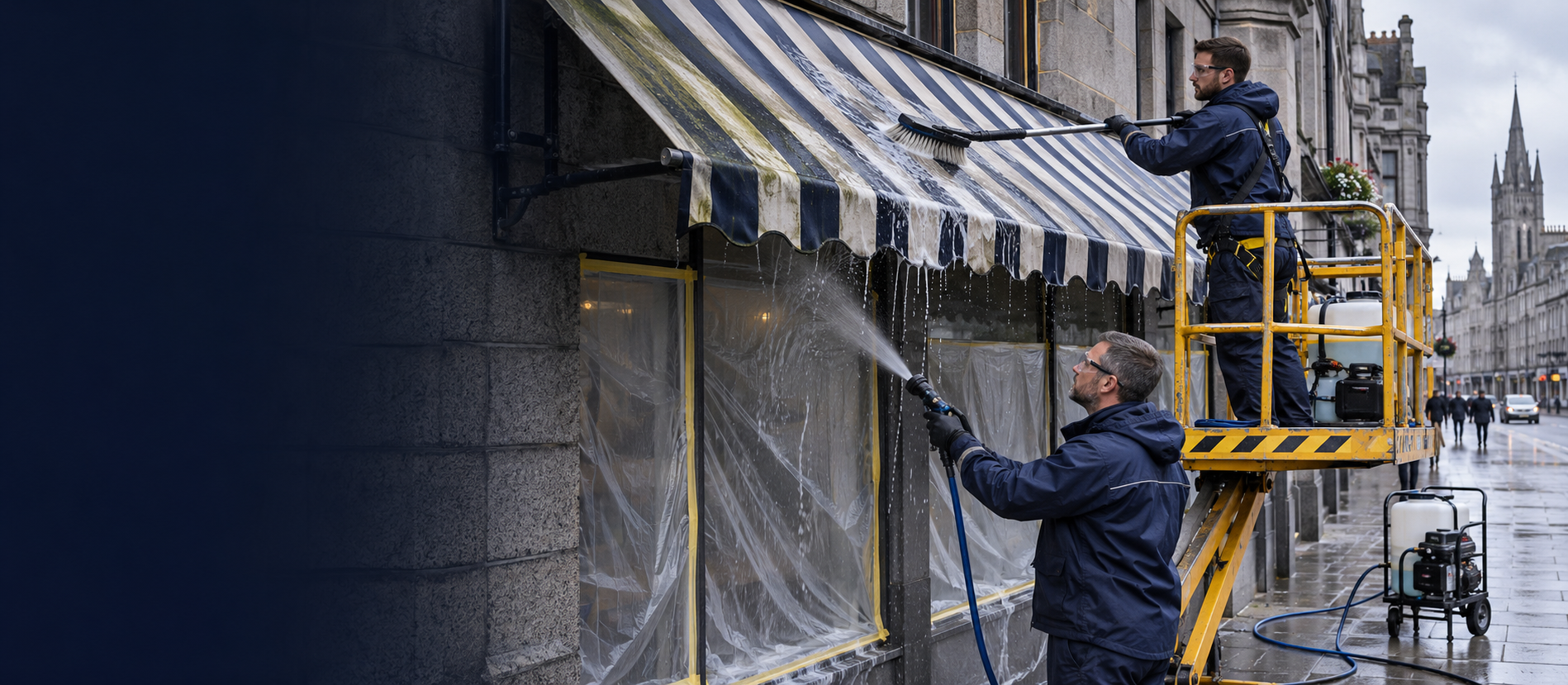
An awning is both part of a building's appearance and a working cover exposed to rain, grit, bird deposits and coastal air. Cleaning it without checking the fabric, seams, frame and water route can do more harm than good. Nova Clean Aberdeen discusses awning cleaning for shops, restaurants, offices and homes across Aberdeen and Aberdeenshire. We assess the material, age, condition, access above the entrance and the soil that has built up before suggesting a method.
A retractable fabric awning cannot be treated like a fixed metal canopy. A painted frame, stitched valance, printed branding and motorised mechanism each have their own restrictions. We ask for photographs of the awning fully extended and retracted where safe, the maker's care instructions if available, its approximate dimensions and whether it opens and closes normally. Cleaning does not repair a failed motor, torn seam or corroded bracket. These issues should be reported before a team works beneath the structure.
Check fabric and coatings before applying water
Canvas, acrylic and coated synthetic fabrics differ in how they shed water and how colour holds during treatment. A strong cleaner or stiff brush can remove a protective finish, spread a stain or fade printed graphics. A small discreet test may help assess colour stability and the response of the fabric. We avoid promising that an old mark, sun fade or mildew staining inside the yarn will disappear completely. If the fabric is brittle or torn, cleaning may not be appropriate until a specialist has assessed its condition.
The underside can collect traffic film, cobwebs and grease from a nearby catering operation. That is different from algae or bird fouling on the upper face. We ask which faces need cleaning and how each can be reached without overloading the frame. A valance or trim may be detachable, but we do not assume permission to remove it. Hardware and fixings should be checked by the responsible maintenance contractor if there are signs of instability.
Prepare the street frontage and people below
A shop or café awning often projects over a pavement. Cleaning water, loose debris and equipment must be controlled so passers-by are not exposed. The operator may need to arrange a quiet trading window, access permissions and a temporary work zone. A ladder or platform is chosen from the height, ground conditions and duration, not merely the awning's apparent size. We ask about street furniture, traffic, signs, overhead cables and whether a neighbouring business shares the frontage.
Inside the premises, merchandise or seating near an open door may need protection. The awning may drip after cleaning and should not be retracted while still wet if the manufacturer's instructions advise against it. We agree when the frontage can reopen and who will check the mechanism before it is operated. A wet pavement needs attention to slip risk during and after work.
Remove deposits without forcing them into seams
Loose leaves and grit should be taken off in a controlled way before a wet process. Rubbing them into the material can abrade the coating. The team selects compatible tools, solution and rinse method from the fabric and soil. High pressure can damage seams and force water into the cassette or motor housing. We do not use an aggressive wash as a universal answer to dark staining. Repeated light treatment may be more suitable than one forceful pass on a delicate surface.
Bird deposits can require a separate contamination assessment, especially if accumulated above a doorway or on the frame. Our pigeon guano removal service considers controlled collection before washing. If birds continue to perch on the structure, fresh deposits may return. The cleaning scope does not silently include proofing or repairs.
Drainage, neighbouring materials and weather
Runoff can mark a shop window, painted sign, stone wall or planting below. We identify how water will be collected or directed and protect sensitive adjacent finishes. A leaking gutter above the awning may cause a recurrent stain; cleaning the fabric alone will not fix the source. We may recommend a repair to the gutter or frame first. A windier day can carry spray beyond the work zone and make the awning difficult to hold safely when extended. The appointment may need to be moved if conditions do not permit controlled work.
Aberdeen's exposed coastal position does not mean every awning needs frequent deep cleaning. A sensible schedule depends on actual soil, the fabric's care requirements and safe access. Regular removal of loose debris may help avoid heavy build-up, while a persistent mark should be assessed rather than treated repeatedly with stronger products.
Shopfronts, terraces and coordinated cleaning
An awning may be part of a wider retail frontage. Our shop and retail deep cleaning service addresses the interior, while window cleaning can be arranged for glazing after overhead work is complete. The order matters because runoff from an awning may mark panes that were cleaned too early. A restaurant terrace may also need terrace cleaning, but the fabrics, floor and drainage require separate methods and scope.
For a managed property, confirm who owns the awning and who can approve work on the building frontage. A lease may place different responsibilities on the tenant and landlord. We do not decide those obligations; we ask for the authorised contact and any building rules. A written quotation can identify exactly which awning and faces are included, the access arrangements and what remains outside cleaning.
What a cleaning result can and cannot change
Surface soil may lift while weathering, discolouration, fading and damaged waterproofing remain. A fabric can look uneven because exposure differs between its upper and lower surfaces. We can explain a test result and photograph the condition before work. Cleaning will not restore lost colour, reapply a protective coating or repair a seam unless those are expressly specified as separate work by a competent provider. An honest assessment is more useful than a promise of a new-looking canopy.
After work, allow the awning to dry according to the material guidance and check that no loose debris remains in a fold or cassette. The owner should operate any motorised system under its normal procedure. The team can report visible defects encountered during access, but a cleaning visit is not a structural inspection of the mounting.
Identify the fabric, age and protective finish
A retractable awning can contain acrylic fabric, coated polyester, PVC or a laminated material. The method that suits one may remove water repellency or leave a mark on another. We ask for the supplier's care instructions if they are available and inspect stitching, faded sections, seam tape and any cracking of the coating. An older canopy may be cleanable yet too fragile for forceful brushing. A test on a discreet area helps establish how dirt lifts and whether colour or finish changes. The expected result should be discussed before treating the full span.
We also check the mechanism and frame from a cleaning perspective. Moving arms, wiring, lighting and signage can limit where water or a product may be applied. The awning should be fully supported in a safe working position. Cleaning does not include servicing the motor, adjusting tension or repairing a torn seam. If a frame is unstable, the owner should arrange a suitable repair before cleaning personnel work beneath it.
Different deposits require different preparation
Coastal salt, airborne grit, pollen, bird droppings and greasy film do not behave alike. Loose particles should be removed gently before wet work so they are not rubbed into the weave. Bird fouling may need additional precautions and an agreed collection method, especially above a busy pavement. Grease near a restaurant extraction outlet can be more persistent than ordinary dust and may have spread into seams. We describe the visible deposits during the survey and select a compatible approach rather than applying one strong chemical to every section.
Dark speckles may be surface growth, embedded staining or a change in the coating itself. A cleaner may reduce surface contamination without restoring fabric that has been degraded by age or weather. Repeated scrubbing can abrade the face and open seams. The test area should show whether the treatment improves appearance enough to justify the work. If the fabric is near the end of its service life, replacement may be a better decision than aggressive cleaning.
Manage water above people, doors and stock
A shopfront awning often extends over a public pavement. Before work, we discuss pedestrian movement, deliveries, opening hours and where runoff will go. Water must not be allowed to enter a doorway, reach electrical signs or spill onto merchandise. The team may need to work outside trading hours and use temporary barriers or controlled collection. The precise arrangement depends on the frontage, height and local access conditions. A quotation should state whether any special access or traffic management is included.
On a domestic terrace, neighbouring balconies, outdoor furniture and planted areas may be affected by rinse water. We ask the owner to identify delicate finishes and items that cannot be moved. If the awning sits over a timber deck or porous stone, protection and cleanup of the surrounding surface should be planned. Cleaning the canopy and cleaning the terrace are separate tasks, although they can be scheduled in a sensible order. The overhead fabric should normally be treated before final floor cleaning.
Drying, folding and the weather window
A fabric awning should not be rolled away while it is still wet if doing so will trap moisture for an extended period. We allow time for drying and explain what the owner should do if rain arrives before the canopy is ready to retract. North-east wind can make spray drift difficult to control and can move the structure unexpectedly. Cold weather slows drying and may make the surrounding ground slippery. A scheduled appointment may therefore need adjustment for safety and quality.
Some stains become more visible as the fabric dries, while a wet surface can hide remaining rings or uneven areas. We recommend a final inspection after drying where practical. If a second controlled pass would help, it should be agreed within the scope rather than assumed. The team should leave the mechanism in the agreed position and tell the owner about any pre-existing wear observed during the work.
Coordinate a commercial frontage without disrupting trade
Retail and hospitality operators may want the awning cleaned alongside windows, signage and the entrance floor. The sequence matters: overhead deposits first, then window cleaning, followed by final ground-level detailing. If another contractor is repainting the fascia or repairing the frame, their work should be completed before the final fabric clean. We ask who can authorise access and whether the premises have a delivery slot, security alarm or landlord restrictions.
A maintenance plan should reflect exposure and use. A sheltered awning may need only periodic gentle care, while a seafront or traffic-facing canopy accumulates soil faster. Owners can remove loose debris using the manufacturer's guidance and report bird fouling early. They should avoid household bleach or pressure washing unless the material's instructions explicitly allow the method. Cleaning can improve presentation, but it cannot reverse faded dye, worn coatings or structural failure.
Document the canopy before and after cleaning
Photographs can record faded colour, worn seams and existing water marks before work starts. After the fabric has dried, compare the result with the agreed trial area rather than its wet appearance. If a section remains stained within the weave, record that limit. The owner can then decide whether maintenance, recoating where suitable, or replacement is the sensible next step. A cleaning visit should not conceal structural wear.
Aberdeen and Aberdeenshire enquiries
We discuss street-front awnings in Aberdeen city centre, Rosemount and the West End, as well as commercial and domestic installations in Bridge of Don, Dyce, Cove Bay, Westhill, Portlethen, Stonehaven and Inverurie. Send the exact postcode, dimensions, material or maker if known, photographs of both faces, height, access below and the stain or deposit that concerns you. Include preferred hours and any trading restrictions.
Call 0845 52 805 20, email